
Preliminary Study on the Uric Acid-Lowering Effect of Anserine-Rich Enzymatic Hydrolysate of Chicken Breast in Mice
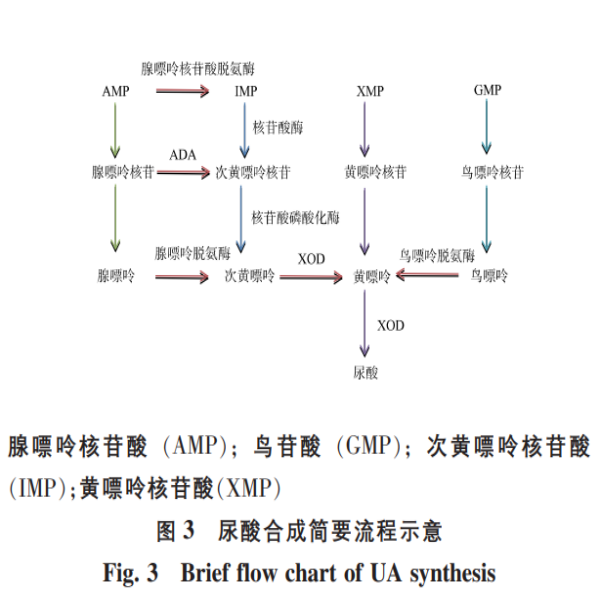
Uric acid is the end product of purine metabolism in the human body. Excessive synthesis or insufficient excretion of uric acid can lead to elevated uric acid levels and thus hyperuricemia. Hyperuricemia is an important biochemical basis for acute arthritis, gout, kidney stones and uric acid nephropathy, and is also closely associated with many traditional cardiovascular diseases such as hypertension, diabetes mellitus and coronary heart disease [1].
Anserine is a histidine-containing dipeptide found in animals, usually extracted from poultry skeletal muscle. It exhibits significant antioxidant, anti-fatigue and uric acid-lowering activities, and has been applied in the fields of foods for special medical purposes and dietary supplements [2-5].
Materials and Methods
Fifty-four mice were weighed and randomly divided into 9 groups (n=6 per group): a normal control group, a model group, a positive control group, low-, medium- and high-dose groups of Sample 1, and low-, medium- and high-dose groups of Sample 2.
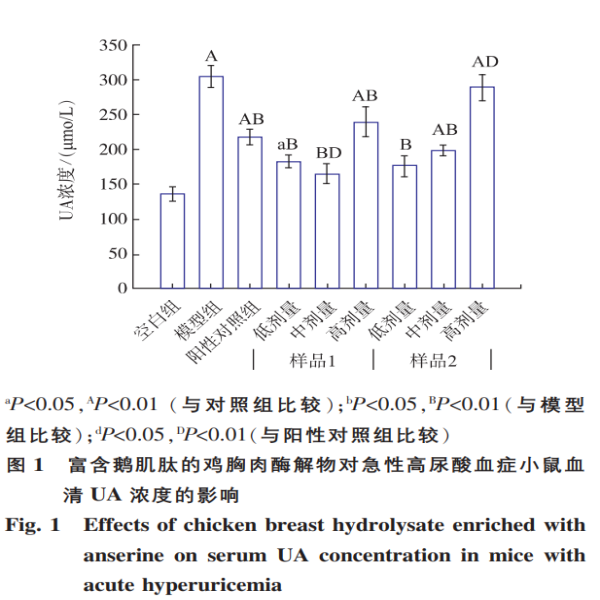
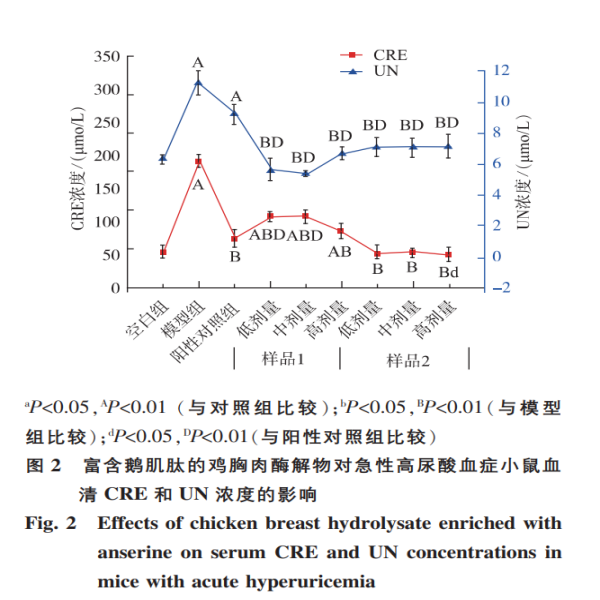
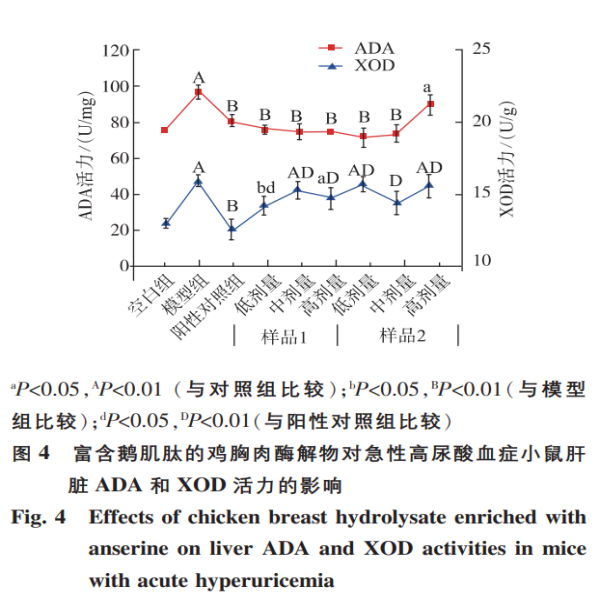
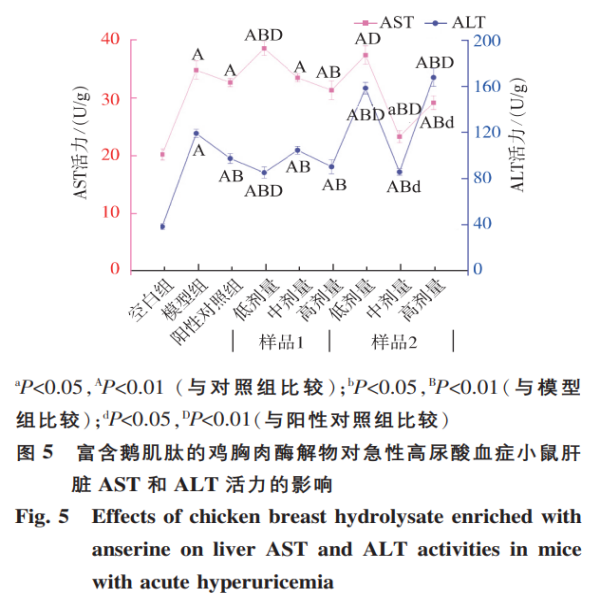
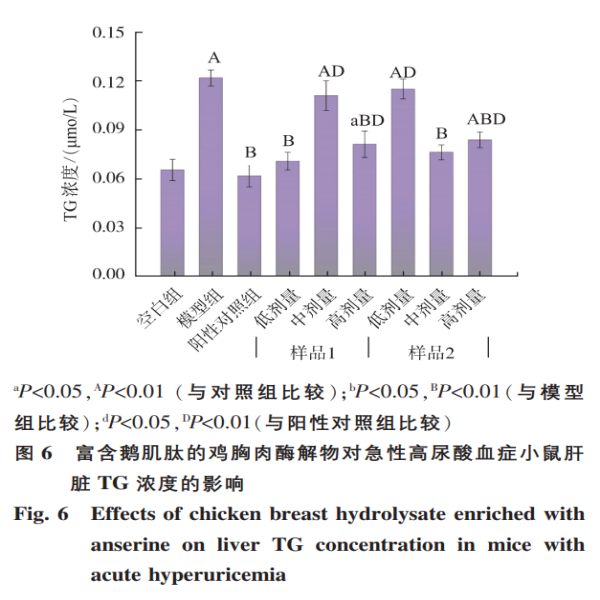
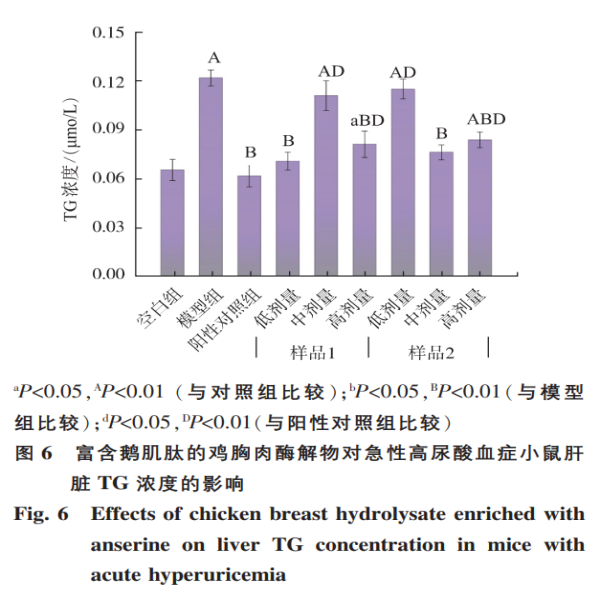
Mice were administered different doses of enzymatic hydrolysates from different sources by gavage. In a mouse model of acute hyperuricemia induced by potassium oxonate, the organ indices, serum levels of uric acid (UA), creatinine (CRE) and urea nitrogen (UN) were observed. The activities of xanthine oxidase (XOD), adenosine deaminase (ADA), aspartate aminotransferase (AST), alanine aminotransferase (ALT) and the concentration of triglyceride (TG) in the liver were determined.
Results
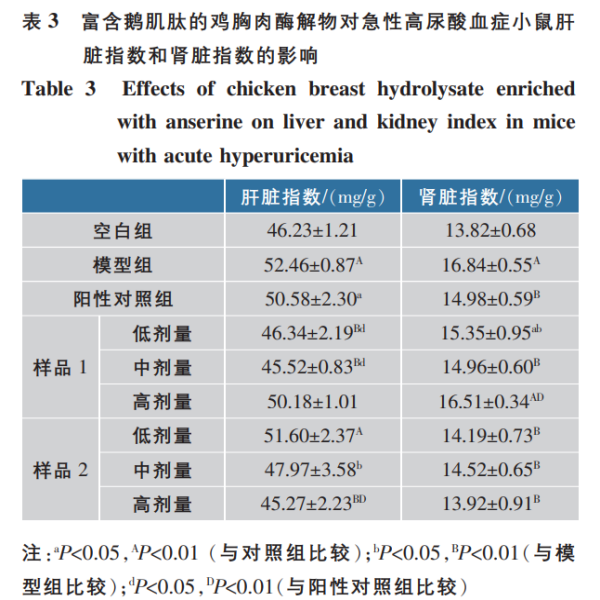
The results showed that anserine-rich enzymatic hydrolysate of chicken breast effectively alleviated liver and kidney indices. The medium doses of Sample 1 and Sample 2 produced the most significant effects, and effectively reduced serum UA, UN and CRE levels, with effects superior to allopurinol.
Both Sample 1 and Sample 2 inhibited hepatic ADA activity in mice, with no significant difference compared with allopurinol. However, only the low dose of Sample 1 significantly reduced XOD activity. The enzymatic hydrolysate of chicken breast in Sample 1 extremely significantly decreased ALT activity; the low dose exhibited a stronger enzyme-lowering effect than allopurinol, and the high dose extremely significantly reduced AST activity. The effect of the hydrolysate on hepatic TG concentration was consistent with that on XOD activity, confirming a correlation between TG concentration and XOD activity. In conclusion, anserine-rich enzymatic hydrolysate of chicken breast effectively reduced uric acid levels and alleviated acute hyperuricemia in mice.
Conclusion
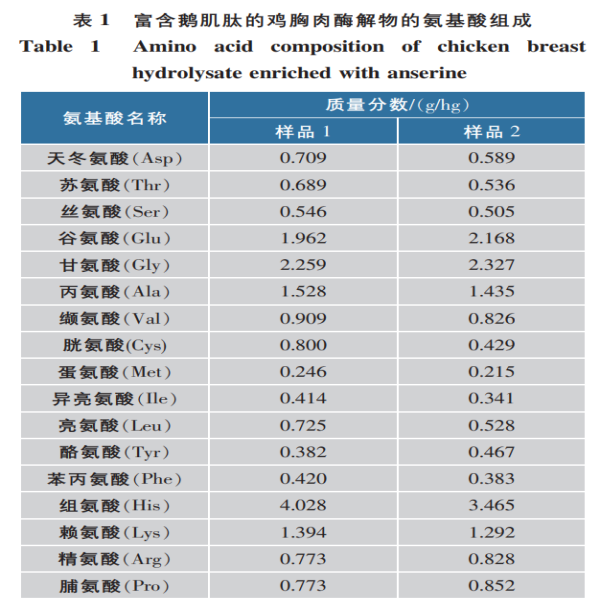
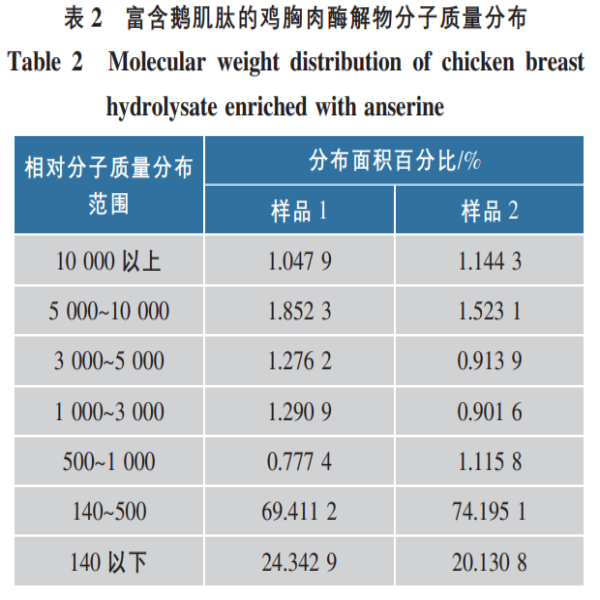
In summary, anserine-rich enzymatic hydrolysate of chicken breast exerts a distinct uric acid-lowering effect and improves partial functions of the kidney and liver, which may be related to the regulation of the activities or expression of hepatic transaminases (AST, ALT). Further research and investigation will be conducted in the future.
References
[1] Li J. Epidemiological study of hyperuricemia. Chinese Journal of Cardiovascular Medicine, 2016, 21(2): 83-86.
[2] Gao X H, Kong B H, Zhao Y H. Carnosine: a natural antioxidant. Meat Industry, 2000, (8): 37-38.
[3] Yang G Y, Wang Y L, Wang Y Y, et al. Experimental study on anti-fatigue effect of carnosine in mice. Journal of Henan Agricultural University, 2003, 37(4): 383-385.
[4] Pang J Z, Shao S Y, Wei B, et al. Effects of carnosine complex and new sodium bicarbonate preparation on anaerobic exercise performance and metabolism in humans. Sports Science Research, 2007, 28(2): 70-73.
[5] Wang Y Q, Chen L, Jia F H, et al. Determination of carnosine and anserine in animal-derived food extracts by UHPLC-ESI-MS/MS. Journal of Instrumental Analysis, 2018, 37(11): 1328-1333.
Post time: Mar-13-2026


