
Functional Activities of Soybean Peptides and Their Applications in Food Processing Industry
Soybean is rich in protein. Soybean peptides are hydrolysates of soybean protein, featuring low molecular weight, rapid absorption, high nutritional value and non-toxicity. Studies have confirmed that soybean peptides possess multiple biological functions, such as antioxidant and hypotensive effects.
As a functional raw material, soybean peptides have been widely applied in food processing and play an important role, showing broad market application prospects.
Functional Activities of Soybean Peptides
Hypotensive Effect
Studies have found that soybean peptides exert a favorable blood pressure regulation effect. They can positively alleviate hypertension-induced complications such as long-term memory impairment and renal damage without adverse side effects after intake[1].
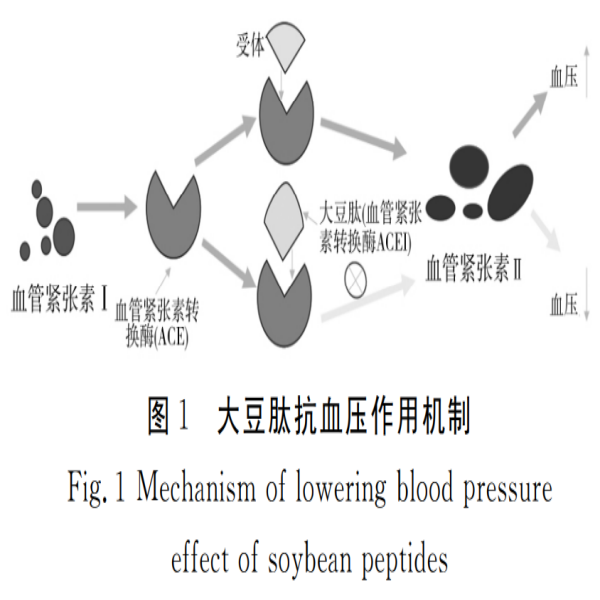
Most antihypertensive soybean peptides act as angiotensin-converting enzyme (ACE) inhibitors. They mainly inhibit ACE activity through competitive binding, thereby lowering blood pressure (see Figure 1)[2-3]. This mechanism provides a novel non-toxic and side-effect-free therapeutic strategy for hypertension treatment.
Antioxidant Effect
Aging is associated with a variety of physiological changes in the human body, including facial aging, organ senescence and neurodegenerative diseases[4-5].
In recent years, natural antioxidant biomolecules have attracted extensive research attention. It has been demonstrated that the anti-aging mechanism of peptides lies in their low molecular weight: compared with high-molecular-weight proteins, peptides can more easily approach free radicals and inhibit free radical-mediated peroxidation[6].
Intestinal Barrier Protection
Destruction of the intestinal barrier and intestinal mucosal dysfunction have been proven to be closely related to various chronic diseases[7]. Intestinal epithelial cells form a physical defense barrier to prevent invasion of foreign harmful substances. Therefore, maintaining the barrier function of intestinal epithelial cells is vital for intestinal homeostasis and human health[8].
Soybean peptides are potential sources of anti-inflammatory compounds and can enhance intestinal barrier protection. Intake of bioactive soybean peptides helps maintain intestinal stability[9]. Relevant literature[10] has verified that soybean peptides can inhibit the activity of intestinal pathogenic microorganisms such as Escherichia coli, Staphylococcus aureus, Pseudomonas aeruginosa and Salmonella enterica.
Enhancement of Immune Regulation
As an essential trace element, selenium can improve human immunity by regulating cellular immunity, humoral immunity and non-specific immunity[11]. Soybean has the ability to accumulate selenium and convert inorganic selenium into organic selenium.
In addition, soybean peptides can enhance the body’s immune regulatory capacity by modulating the contents of immunoglobulins and immune factors[12].
Promotion of Mineral Absorption and Utilization
Small peptides have the advantages of low energy consumption during absorption, fast transport rate and unsaturated carrier binding. McDonagh et al.[13] proved that small peptides can effectively promote calcium absorption.
Applications of Soybean Peptides in Food Processing
Compared with artificial additives, natural peptide compounds are more favored by consumers. As one of the most extensively studied peptides in food processing, soybean peptides present promising application prospects.
Application in Fermented Foods
Soybean peptides have been proven to maintain microbial activity under low-temperature conditions. Liu et al.[14] found that after dough freezing for 7 days and 30 days, the height of yeast-fermented dough supplemented with 0.1% soybean peptides was 4.8 times and 8 times that of the blank group, respectively. The addition of soybean peptides at low temperature can preserve yeast fermentation capacity, improve the quality and chewiness of steamed buns, maintain product elasticity, reduce dough hardness, and optimize the taste of steamed buns.
Yogurt is a globally popular fermented food produced by lactic acid bacteria fermentation. Hu et al.[15] added soybean peptides during yogurt fermentation and found that soybean peptides, as a nitrogen source, could improve the survival rate of lactic acid bacteria and yogurt quality. Yogurt fermented with 2% soybean peptides exhibited more uniform texture, significantly higher hardness and elasticity, and 8 more flavor compounds than the blank group.
The application of soybean peptides in fermented foods is also reflected in the enhanced bioactivity of soybean peptides obtained by fermenting whole soybean or soybean protein. Zhu et al.[16] isolated and purified two types of soy sauce produced from fermented full-fat and defatted soybeans. The umami taste of soy sauce was mainly attributed to glutamic acid. Bioactive peptides in soybean protein including TGC, GLE, VEAL, DR, DAE and EVC are rich in glutamic acid and aspartic acid residues. Individual addition of these peptides to soy sauce could significantly enhance umami flavor.
Application in Dairy Products
Fresh cream is a popular dairy product. Traditional cream products are mainly composed of milk and oil. However, lactose intolerance and milk protein allergy are common among consumers. To solve this problem, recombined plant-based cream has been widely developed and applied. Soybean is lactose-free and nutritionally dense, making it increasingly popular in related research.
Fu et al.[17] prepared recombined soy-based whipped cream (RSWC) using pepsin-hydrolyzed soy protein isolate (SPHPe) and papain-hydrolyzed soy protein isolate (SPHPa). Both hydrolysates improved the physical properties and whipping performance of RSWC. SPHPe containing small-molecular soybean peptides showed the second-highest overrun value and the best foaming stability. Overall, SPHPe is more suitable for preparing high-quality recombined plant-based cream, providing a new approach for the production of plant-based whipped cream.
Application in Sports Nutritional Foods
Small-molecular peptides are characterized by low molecular weight and easy absorption. Appropriate intake can alleviate post-exercise fatigue. The national standard GB 24154—2015 General Principles of Sports Nutritional Foods stipulates that peptides can be used in sports nutritional foods for population requiring recovery after moderate/high-intensity or prolonged exercise, relieving muscle fatigue, joint wear and physical fitness decline.
You Lirong[18] developed solid beverage sports supplements by mixing soybean peptides with fruit juice, and conducted a 6-month muscle gain trial on fitness and bodybuilding enthusiasts. The results showed that compared with the blank control group, soybean peptide solid sports beverages significantly increased muscle mass and reduced body fat percentage.
Yu et al.[19] fed mice with different doses of soybean peptides and set up a control group. After 20 days of feeding, a swimming endurance test was carried out. The results showed that the swimming time of mice increased with soybean peptide dosage; the swimming time of mice fed with high-dose soybean peptides increased by 70% compared with the control group. Soybean peptides can effectively accelerate lactic acid elimination and increase hepatic glycogen reserve after exercise in mice.
Fang et al.[20] supplemented mice feed with whey protein and soybean peptides respectively, and conducted hypoxia tolerance and weight-bearing swimming tests. Muscle glycogen and hepatic glycogen levels were determined. The results indicated that the soybean peptide group had the highest muscle and hepatic glycogen contents, as well as the best morphological characteristics of muscle tissue: regular muscle cell morphology, increased cell density and compact arrangement. It was confirmed that soybean peptides can effectively alleviate exercise-induced fatigue.
Lei Hairong et al.[21] fed mice with milk powder supplemented by soybean oligopeptides. Different doses of soybean peptide milk powder prolonged the swimming endurance time of mice to varying degrees, indicating that soybean peptide-enriched milk powder has definite anti-fatigue effects and high nutritional value, with broad application prospects in the food processing market.
In addition, low-carbohydrate diet, featured by low carbohydrate, high fat and high protein, is widely popular among fitness enthusiasts. Reports show that soybean peptides can increase starch gelatinization temperature, reduce peak viscosity and swelling power, and delay starch gelatinization under heat-moisture treatment. Meanwhile, the addition of soybean peptides increases high-quality nitrogen source content, providing a new idea for the development of low-carb and high-protein processed foods[22].
Soybean peptides also exert intestinal protection effects in sports nutritional foods. Athletes often suffer from exercise-induced irritable bowel syndrome manifested as abdominal pain and diarrhea after long-term high-intensity exercise[23]. Li Shicheng et al.[24] fed mice with soybean peptides and conducted slope running training. Intestinal histological observation showed that compared with the control group, the thickness of small intestinal mucosa and villi were significantly increased. As an excellent nitrogen source with low molecular weight and high absorbability, soybean peptides can protect the intestinal tract, supplement nutrients for the body, and serve as promising nutritional supplements for athletes with great market potential.
Application in Other Foods
Soybean peptides have been proven to possess anti-cancer, anti-inflammatory, easily digestible, natural and non-toxic properties. Researchers are committed to developing soybean peptides as auxiliary anti-cancer and anti-inflammatory drugs as well as special medical foods. Hsieh et al.[25] found that lunasin can prevent inflammation caused by obesity, and the addition of lunasin to food can prevent and treat obesity-related inflammation.
Soybean peptides are small-molecular products obtained by protease hydrolysis or fermentation hydrolysis. They can be rapidly transported in the intestinal tract, more easily absorbed by the body than intact proteins, better meet amino acid demands and reduce nitrogen loss. In recent years, numerous studies on the application of soybean peptides in feed have opened up new development directions.
Conclusion
With in-depth research on soybean peptides, their physiological functions have been continuously explored, and their applications in food processing have attracted increasing attention, covering fermented foods, dairy products, sports nutritional foods and other fields. In practical application, dosage, food adaptability and gastrointestinal tolerance should be fully considered.
References
[1] LITC, GUO R R, ZONG QD, et al. Application of molecular docking in elaborating molecular mechanisms and interactions of supramolecular cyclodextrin[J]. Carbohydrate Polymers, 2022, 276:118644.
[2] WANG WY, DE MEJA EG. A new frontier in soy bioactive peptides that may prevent age related chronic diseases[J]. Comprehensive Reviews in Food Science and Food Safety, 2005, 4(4):63-78.
[3] ZHANG Y H, WANG Q, ZHOU S M. Ultrafiltration separation of antihypertensive peptides from peanut[J]. China Oils and Fats, 2007(7):28-31.
[4] DARTIGUES JF. Alzheimer’s disease: a global challenge for the 21st century[J]. Lancet Neurol, 2009, 8(12):1082-1083.
[5] WANG Y, YU M, SHI Y W, et al. Effects of a fermented beverage of Changbai mountain fruit and vegetables on the composition of gut microbiota in mice[J]. Plant Foods for Human Nutrition, 2019, 74(4):468-473.
[6] LIU H, TONG X. Research progress on antioxidant peptides from soybean hydrolyzed protein[J]. China Condiment, 2021, 46(1):191-195.[7] VUJKOVIC-CVIN I, SKLAR J, JIANG L J, et al. Host variables confound gut microbiota studies of human disease[J]. Nature, 2020, 587(7834):448-454.
[7] OMONIJO F A, LIU S X, HUI Q R, et al. Thymol improves barrier function and attenuates inflammatory responses in porcine intestinal epithelial cells during lipopolysaccharide (LPS) induced inflammation[J]. Journal of Agricultural and Food Chemistry, 2019, 67(2):615-624.
[8] INDIANO-ROMACHO P, FERNANDEZ-TOME S, AMIGO L, et al. Multifunctionality of lunasin and peptides released during its simulated gastrointestinal digestion[J]. Food Research International, 2019, 125:108513.
[9] AN C, KUDA T, YAZAKI T, et al. Caecal fermentation, putrefaction and microbiotas in rats fed milk casein, soy protein or fish meal[J]. Applied Microbiology & Biotechnology, 2014, 98(6):2779-2787.
[10] QIN LQ, ZHANG Y M, WAN C Y, et al. MiR-196-5p involvement in selenium deficiency induced immune damage via targeting of NFκBIA in the chicken trachea[J]. Metallomics, 2020, 12(11):1679-1692.
[11] ZHANG J, FU X H, LI W H. Enhancement of nutritional soy protein and peptide supplementation on skin repair in rats[J]. Journal of Functional Foods, 2020, 75:104231.
[12] MCDONAGH D, FITZGERALD R J. Production of caseinophosphopeptides(CPPs)from sodium caseinate using a range of commercial protease preparations[J]. International Dairy Journal, 1998, 8(1):39-45.
[13] LIU ML, LIU XQ, LI Y, et al. Soybean peptides cryoprotective effects on Saccharomyces cerevisiae fermenting power in frozen dough and maintenance of the Chinese steamed bread qualities[J]. Journal of Food Processing and Preservation, 2020, 44(8):14572.
[14] HU Y, LI Y, LIU XQ. Soybean peptides promote yoghurt fermentation and quality[J]. Original Research Paper, 2020, 42(10):1927-1937.
[15] ZHU X P, SUN-WATERHOUSE D X, et al. Comparative study on the novel umami-active peptides of the whole soybeans and the defatted soybeans fermented soy sauce[J]. Journal of the Science of Food and Agriculture, 2021, 101(1):158-166.
[16] FU L W, HE Z Y, ZENG M M, et al. Effects of soy protein composition in recombined soy based cream on the stability[J]. Journal of the Science of Food and Agriculture, 2020, 100(6):2732-2741.
[17] YOU L R. Research and development of soybean peptide sports supplements and analysis of its muscle growth promoting effect[J]. Food Research and Development, 2017, 38(8):163-165.
[18] YU B, LU Z X, BIE X M, et al. Scavenging and antifatigue activity of fermented defatted soybean peptides[J]. European Food Research and Technology, 2008, 226(3):415-421.
[19] FANG L, ZHANG R X, WEI Y, et al. Antifatigue effects of fermented soybean protein peptides in mice[J]. Journal of the Science of Food and Agriculture, 2021, 102(7):2693-2703.
[20] LEI H R, LIANG H X. Development of peptide-rich milk powder and study on its anti-fatigue efficacy[J]. Journal of Changchun University, 2015, 25(10):60-63.
[21] CHEN X, LUO J W, FU L, et al. Structural, physicochemical, and digestibility properties of starch soybean peptide complex subjected to heat moisture treatment[J]. Food Chemistry, 2019, 297:124957.
[22] PETERS H P, BOS M, SEEBREGTS L, et al. Gastrointestinal symptoms in long distance runners, cyclists, and triathletes: prevalence, medication, and etiology[J]. American Journal of Gastroenterology, 1999, 94(6):1570-1581.
[23] LI S C, LI Y G, WANG Q R, et al. Effects of soybean oligopeptide supplementation on intestinal mucosal barrier in rats after high-intensity exercise[J]. Journal of Wuhan Institute of Physical Education, 2009, 43(4):39-43.
[25] HSIEH C C, MARTINEZ-VILLALUENGA C, DE LUMEN B O, et al. Updating the research on the chemopreventive and therapeutic role of the peptide lunasin[J]. Journal of the Science of Food and Agriculture, 2017, 98(6):2070-2079.
Post time: May-11-2026


