
Alpine skiing is an anaerobic sport characterized by high speed, intensive physical exertion, and high technical requirements [1-2]. Under long-term high-intensity training, alpine skiers accumulate large amounts of lactic acid in the body and are highly prone to fatigue [3-4].
Fatigue is a normal physiological phenomenon during exercise and can be classified into acute fatigue and chronic fatigue. Acute fatigue can be eliminated by short-term rest, but the long-term accumulation of acute fatigue leads to the development of chronic fatigue. Chronic fatigue not only impairs athletes’ competitive performance but also endangers their physical health [5]. Therefore, the development of functional foods with anti-fatigue effects has long been a research hotspot in the field of sports nutrition.
Soybean peptides are small-molecule bioactive peptides obtained via enzymatic hydrolysis of soybean protein, featuring high solubility, easy digestion and absorption, and high nutritional value [6]. In addition, soybean peptides exert regulatory effects on exercise-induced fatigue by promoting hepatic glycogen synthesis, accelerating muscle injury recovery, reducing the accumulation of blood lactic acid and blood urea nitrogen, and scavenging oxygen free radicals [6].
In this study, indicators including body weight, blood lactic acid concentration, serum creatine kinase activity, serum testosterone concentration, and serum cortisol concentration were measured in male elite alpine skiers before and after 8 weeks of training. The effects of soybean oligopeptides on the recovery from exercise-induced fatigue in alpine skiers were investigated, providing data and practical support for the rational selection and application of soybean oligopeptide products among alpine skiers.
1 Overview of Methods
Thirty male elite alpine skiers from Heilongjiang Province were randomly and equally divided into three groups: a blank control group, a soybean protein group, and a soybean oligopeptide group. After high-intensity training, each group was supplemented with the corresponding nutritional agent for 8 weeks. Changes in body weight, blood lactic acid concentration, serum creatine kinase activity, serum testosterone concentration, and serum cortisol concentration were measured before and after the training period.
2 Results
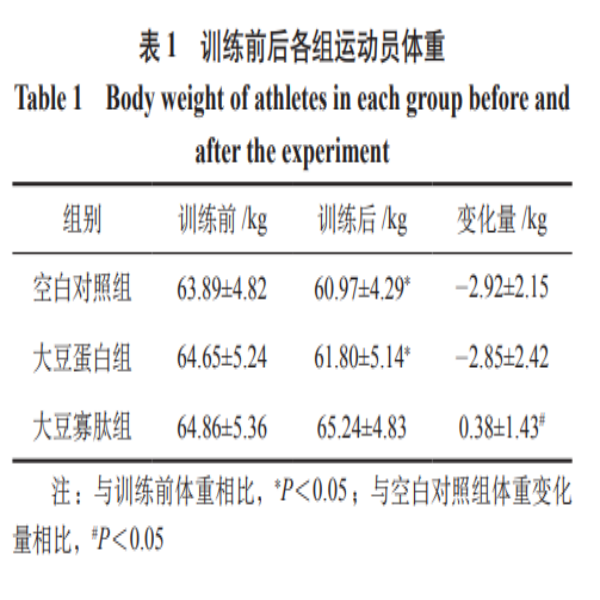
Body weight is an important indicator reflecting transverse physical development, physical robustness, nutritional status, and strength potential in athletes, and is highly valuable in sports measurement and evaluation [7].
Studies have shown that higher muscle mass corresponds to a larger physiological cross-sectional area of muscle and greater absolute strength. As a physically dominated speed-strength sport, alpine skiing imposes high strength demands on athletes. Meanwhile, changes in body weight during a training cycle can reflect the physiological status of athletes [7].
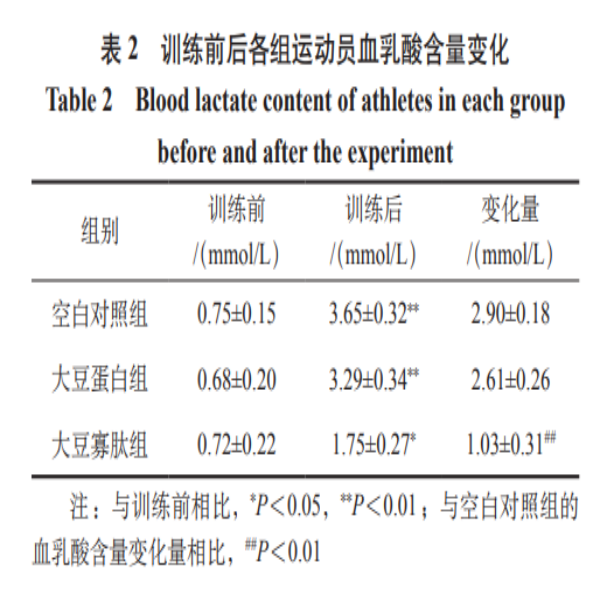
Under anaerobic conditions, glucose, muscle glycogen, hepatic glycogen, and other substances in the human body undergo glycolysis to produce lactic acid [8]. Long-term high-intensity alpine skiing training causes lactic acid accumulation, disturbs the internal environment and normal energy metabolism, and further induces exercise-induced fatigue. Lower post-exercise lactic acid levels indicate stronger anti-fatigue capacity, and vice versa [9].
As a key metabolic enzyme, creatine kinase is mainly distributed in human skeletal muscle and myocardium, participating in the rapid synthesis of ATP during short-term high-intensity exercise and ATP restoration after exercise [10].
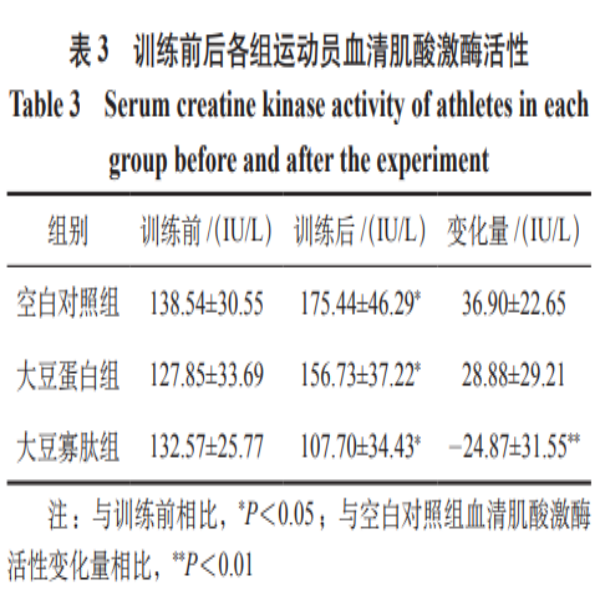
Higher post-exercise serum creatine kinase activity correlates with longer muscle repair time and earlier onset of fatigue. Therefore, measuring changes in serum creatine kinase activity before and after training enables the evaluation of physical function and post-exercise recovery in alpine skiers [10].During fatigue, the body consumes both muscle glycogen and hepatic glycogen to maintain normal blood glucose levels. A significant increase in hepatic glycogen after high-intensity training suggests that the body can alleviate fatigue by enhancing hepatic glycogen storage or reducing its consumption during exercise [11-12].
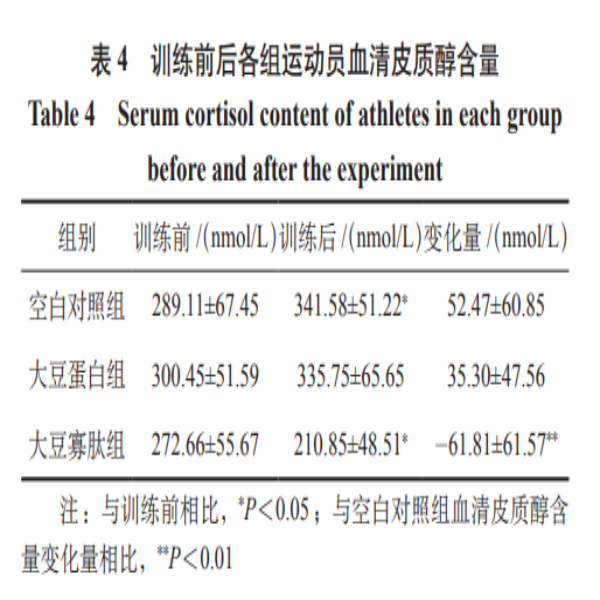
Serum cortisol is a steroid hormone that promotes gluconeogenesis from lactic acid, α-ketoglutarate, glycerol-3-phosphate, and other substrates. It also inhibits the activity of enzymes related to protein synthesis via allosteric regulation and promotes the conversion of proteins and their metabolites into muscle glycogen and hepatic glycogen [13].
In addition, serum cortisol affects the regeneration rate of muscle fibers after strength training, thereby influencing post-training muscular strength [13]. Thus, changes in serum cortisol concentration reflect training load intensity during a training cycle. Reduced fluctuations in serum cortisol indicate adaptation to the training load, whereas increased fluctuations suggest an excessive training load [8, 13].
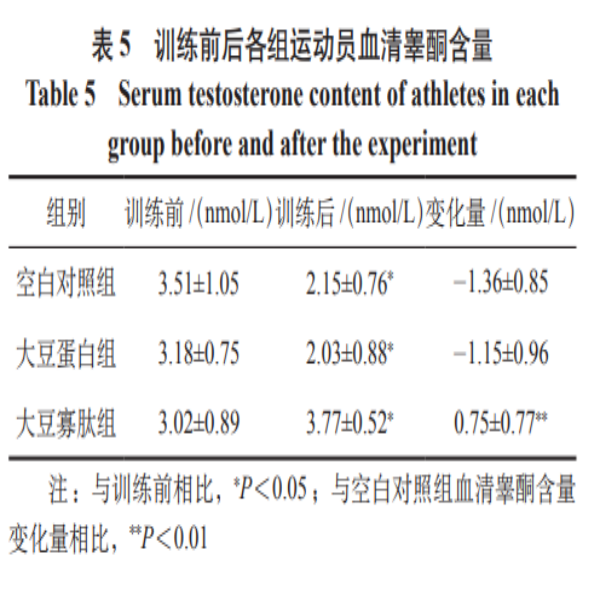
Testosterone is an anabolic hormone that promotes protein synthesis, muscle hypertrophy, and body weight gain, serving as an important biochemical marker of muscular strength in athletes [14]. It also enhances hemoglobin synthesis, boosts antibody production, and improves immune function and self-regulation [8]. Therefore, higher serum testosterone levels facilitate faster post-training recovery and the improvement of physical functions.
The results showed no significant changes in body weight in the soybean oligopeptide group (P > 0.05), whereas body weight decreased significantly in the blank control group and the soybean protein group (P < 0.05). The changes in blood lactic acid concentration, serum creatine kinase activity, serum testosterone concentration, and serum cortisol concentration in the soybean oligopeptide group were significantly lower than those in the blank control group and the soybean protein group (P < 0.05).
Discussion
This study mainly investigated the effects of soybean oligopeptide supplementation on recovery from exercise-induced fatigue in alpine skiers following 8 weeks of high-load training.
Soybean oligopeptides alleviate exercise-induced fatigue after high-load training and improve training tolerance in alpine skiers by promoting gluconeogenesis of lactic acid to restore glycogen reserves and reducing lactic acid accumulation.
Furthermore, soybean oligopeptides accelerate muscle injury recovery after high-intensity training by increasing the rate of protein synthesis, thereby delaying the onset of fatigue.
References
[1] He W, Shu Y, Li HP, et al. Research on competition and kinematic characteristics of alpine skiing [J]. China Sport Science and Technology, 2020, 56(12): 3-8.
[2] Xu JC, Gao C, Gao XD, et al. Characteristics of foreign elite alpine skiers [J]. Chinese Journal of Sports Medicine, 2019, 38(1): 67-73.
[3] Hu X. Investigation and analysis of sports injuries in athletes of the national cross-border women’s ice hockey team [D]. Wuhan: Central China Normal University, 2020.
[4] Zhang B, Xu SS. Recovery as an important measure to improve competitive ability of speed skaters [J]. China Winter Sports, 2008, 30(3): 15-18.
[5] Belluardo N, Westerblad H, Mudó G, et al. Neuromuscular junction disassembly and muscle fatigue in mice lacking neurotrophin 4 [J]. Molecular and Cellular Neurosciences, 2001, 18(1): 56-67.
[6] Li K, Zhou W, Hou FT. Regulatory effect of soybean peptide nutritional supplements on exercise-induced fatigue [J]. Food Research and Development, 2021, 42(21): 231-232.
[7] Zhao YH, Li M, Zhao CQ, et al. Research on age, height and weight trends of foreign elite alpine skiers [J]. Journal of Harbin Sport University, 2013, 31(2): 85-88.
[8] Zhou LM. Design and development of information management system for alpine skiing team [D]. Shanghai: East China Normal University, 2011.
[9] Yang SL, Li LH. Research progress of anti-fatigue peptides [J]. Journal of Zhanjiang Ocean University (Natural Science), 2006(6): 77-82.
[10] Xu B, Yin ZS. Biochemical monitoring and nutritional supplementation for alpine skiers [J]. China Winter Sports, 2009, 31(4): 48-50.
[11] Luo XD, Pan FG, Zhang TH, et al. Effects of velvet antler polypeptides on hypoxia tolerance and anti-fatigue ability in mice [J]. Food Science, 2008(4): 386-388.
[12] Liu XJ, Zhang XY, Wang CH. Anti-fatigue effect of whey polypeptide compound powder in exercise mice [J]. Food Research and Development, 2021, 42(15): 119-123.
[13] Li R. Effect of vibration training on lower limb strength in male alpine skiers [D]. Kaifeng: Henan University, 2018.
[14] Taniguchi M, Noda Y, Aida R, et al. Cationic peptides from enzymatic hydrolysates of soybean proteins exhibit LPS-neutralizing and angiogenic activities [J]. Journal of Bioscience and Bioengineering, 2019, 127(2): 176-182.
Post time: Mar-30-2026


